What Duchenne disease is
Duchenne muscular dystrophy is an inherited disease caused by a mutation in the gene responsible for producing dystrophin. Dystrophin acts like reinforcement for muscle cells: without it, muscles are damaged even by small strain and are gradually replaced by connective and fatty tissue. The disease is progressive, so a child’s condition worsens each year.
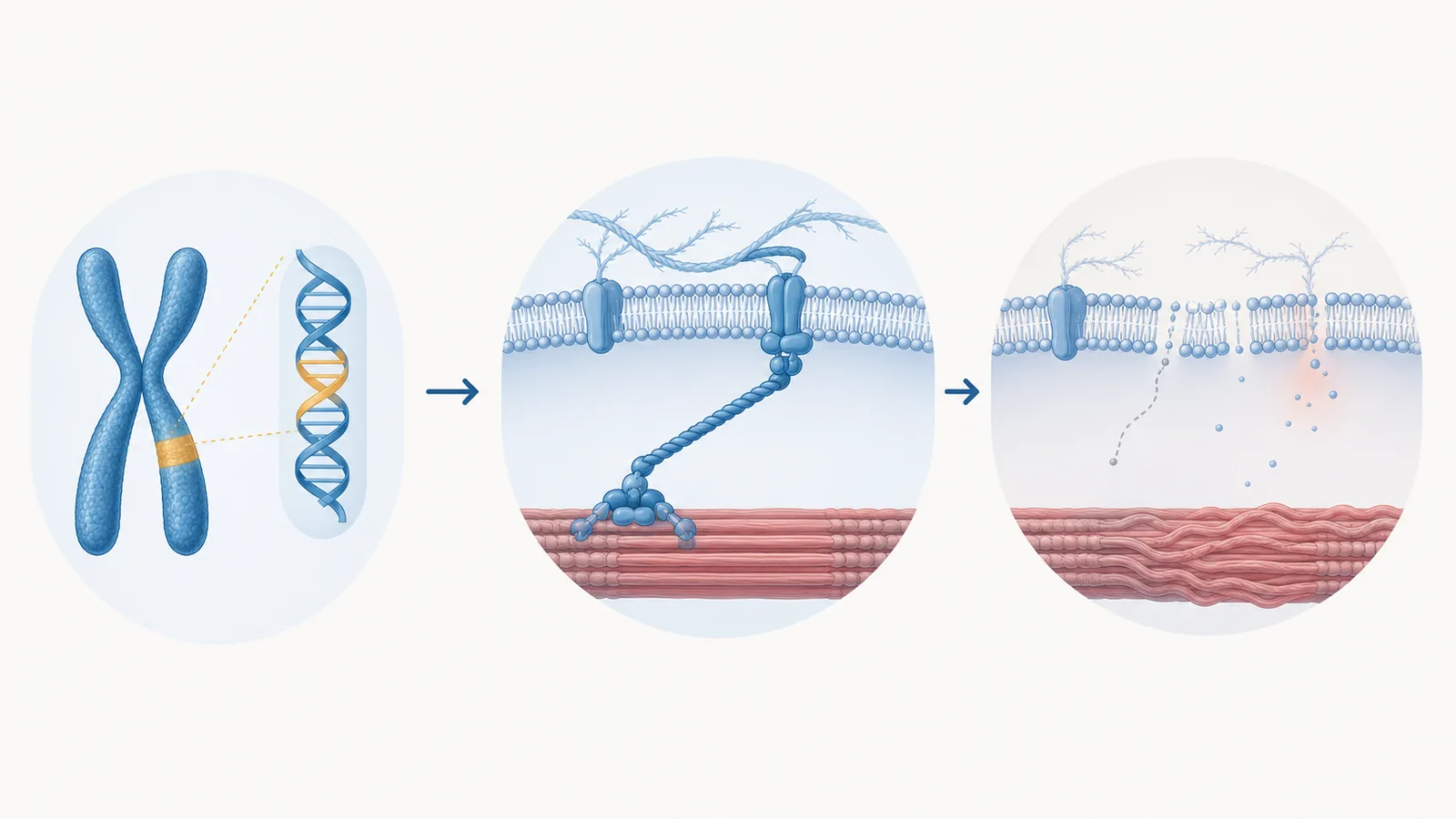
Why it mostly affects boys
The dystrophin gene is located on the X chromosome. Boys have only one X chromosome, so the mutation almost always manifests. Girls are more often carriers. Duchenne muscular dystrophy occurs in about 1 in 3,300 to 5,000 newborn boys and is the most common inherited muscular dystrophy of childhood.
Early symptoms: what parents should watch for
The disease usually appears between ages 2 and 5. Warning signs include:
- the child started walking late or falls often;
- has difficulty getting up from the floor;
- walks with a waddling gait and cannot run or jump like peers;
- gets tired quickly;
- has enlarged calf muscles;
- many children also have delayed speech development.
How Duchenne muscular dystrophy progresses
In the early stage, running, jumping, and stairs become difficult. Later, the legs and pelvis weaken, walking becomes harder, and the child may need a wheelchair. In the late stage, the arms, breathing muscles, and heart weaken. Without treatment, Duchenne shortens life expectancy; modern supportive therapy extends life but does not stop the disease.
How it is diagnosed
A blood test for creatine kinase (CK) can raise suspicion; in Duchenne it is sharply elevated. The diagnosis is confirmed by genetic testing and sometimes a muscle biopsy. Early diagnosis is critical because it opens a treatment window while muscles are still preserved.
Can Duchenne be stopped?
Supportive therapy can slow the course, but it does not stop the disease. Gene therapy changed the outlook. Elevidys delivers a working copy of the gene to the muscles and can stop destruction. It is effective while muscles are still preserved, so the child’s age at treatment is decisive.
Duchenne muscular dystrophy in Ukraine
In Ukraine, Duchenne is classified as a rare disease. Elevidys gene therapy is not registered in Ukraine and is not funded by the state, so treatment is possible only abroad and costs about $2.9 million. For most families, this is impossible without public support.
Lukian’s story
Lukian Snitynskyi is 4 years old and from Ternopil. His family heard the diagnosis “Duchenne” in March 2025. His father is an officer in the Armed Forces of Ukraine. The fundraiser is ongoing while his age still gives the therapy a chance to work.

Documents
Documents confirming the diagnosis
Medical reports, examination results, and documents that help explain Lukian’s diagnosis.
Frequently asked questions
-
Is Duchenne always inherited?
No. Up to 30% of cases are new (“de novo”) mutations, with no history of the disease in either parent’s family.
-
Can it be cured completely?
No. Elevidys can stop progression, but it does not restore muscles that have already been lost. That is why timing is critical.
-
At what age is treatment effective?
The most important thing is to treat as early as possible while muscles are still preserved. The final decision is made by the medical team after examination, but time is very important.
-
Do girls get Duchenne?
Rarely, and usually more mildly; girls are more often carriers.